Posts

Showing posts with the label Certificação

When crustacean turns into fish
Image
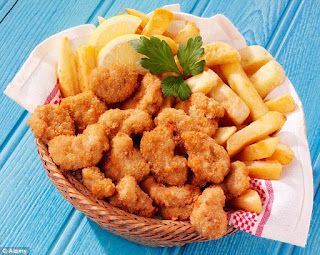
Introduced by Young’s Seafood, the UK’s leading frozen food manufacturer, after World War II as a way to use the langoustines caught by trawlermen in search of white fish, by the 1970s scampi and chips had become a favourite pub meal, served ‘in the basket’. Scampi nowdays, however, is far from simple. As part of a code of practice drawn up by the food industries in 1998, three pages of A4 are dedicated to how scampi sold in shops should be described. ... It is clear that many scampi bites sold are a long way from a fresh langoustine tail dipped in breadcrumbs and lightly fried — and nowhere is that better illustrated than in the distance travelled by some of the fish used to bulk them out.  Earlier this year, Professor Mariani Stefano, a biologist at the University of Salford, tested the DNA of samples of frozen scampi bites. Of the nine tested, two were found to contain pangasius. ... He explains: ‘It is actually incredibly bland, with almost no flavour at all. ...
seafood all over the place

credible arbiters of certifications, such as the Marine Stewardship Council (MSC), require detailed environmental and traceability standards.  although these standards have been met in many commercial fisheries throughout the developed world ( 3), developing country fisheries (DCFs) represent only 7% of ~220 total MSC-certified fisheries ( 4, 5).  with the United Nations Food and Agriculture Organization reporting that developing countries account for ~50% of seafood entering international trade, this presents a fundamental challenge for marketers of sustainable seafood.  some people are comfortable with the idea that seafood eaten in Europe is sustainable because are under the European Union rules and stock management plans. but much seafood in Europe is imported. imports represent around two thirds of the Portuguese seafood supply. fishery Improvement Projects (FIPs) are an alternative to the established certification schemes (e.g MSC) with the goal is ...

Portuguese sardine is with problems again

The Marine Stewardship Council (MSC) announced last August the suspension of the Portuguese sardine purse seine fishery, after Intertek Fisheries Certification (IFC) withdrew the certification following the fourth surveillance audit report on the fishery.  Sardine harvested after 14 August may no longer be identified or sold as MSC certified and cannot carry the blue MSC sustainable fishery ecolabel.  According to the surveillance report, the fishery no longer complies with the minimum requirements of Principle 1 of the MSC standard - sustainable fish stocks. This principle demands that the fishing activity must be at a level which is sustainable for the fish population.  This is the second time the fishery has failed an annual surveillance audit since it was first certified. In both cases the suspension was due to low Iberian sardine stock levels. Despite efforts made by the fishery and the Portuguese institutions in favour of sustainable management, stocks are no...

How to feed a city

Image
It is becoming a big challenge to feed cities, where most of the world population lives nowadays. Cities have lots of people that need lots of food. Even tough there is not so much food produced in the cities. Initiatives like this in Oxford can work at the local level to help people to engage in more sustainable choices. The aim of Good Food Oxford is to identify and catalyse actions by individuals and organisations that will measurably reduce the greenhouse gas emissions associated with Oxford’s food system while promoting environmental sustainability, social inclusion, health, wellbeing, the local economy and a thriving food culture.

Fish tales

Image
Fish tales is a company from The Netherlands that sells sustainable seafood. The interesting thing is that they do not only have a MSC certification, they also promote the fishery in videos and the producers in the packages.   It seems that it is good business to tell the story behind the fish. The responsible, Bart van Olphen, a chef and the author, says: What makes seafood stories so special?  You won’t be able to easily find a nice story behind every product.  Highly educated marketing managers and communications directors are needed to bring out stories people hopefully pick up.  This is the reason why I am so happy to be active in the seafood business: because fish is the only product we still consume from the wild, it leads directly to many great stories, beautiful scenery and people.  Communicating seafood is the easiest job to do; you just build a bridge between producers and consumers and tell the real story in as transparent a way as possi...

The empty feeling of no conclusions

Image
When I started the PhD, the cod stocks were in very bad shape. On the opposite, sardine is a fish from low level of the marine food web; catch with purse-seining, a fishery with relatively low environmental impacts, and had greater potential of consumption in Portugal, since Portuguese love more sardines than any other people. Because Portuguese eat so much cod, it would be great if they would eat more sardine (or other small pelagic fish) instead. It turns out that after some years of trying to have something interesting to say in a PhD thesis... The cod is not so bad because some stocks (not all!) as for example the Norwegian, recovered and are now certified by MSC . Plus this year the North Sea cod stock seems that had finally recovered . And Portuguese sardine stock (Iberian stock) had problems, with consequent s uspension of the MSC certification in 2012. Now more and more evidences show that it is a threat to marine life the depletion of sardine stocks, with importan...

Eating fish

It's complicated. It can come from different species, stocks, gears, vessels, countries, processes, certifications... There is not only one rule. And each rule should be adapted for the context. The facts are changing all the time, needs continuous revision. What to do? Sorry...I do not have an answer. Only comments that help to guide the choice. If my PhD, and 4 years of my lifetime, will help in some way, I would be a veeeery happy women.

Portuguese are eating more cod than ever before

Image
Exports of Norwegian clipfish to Portugal are doing very well, even though the country finds itself in a very serious economic situation.   Never before have exports of clipfish to Portugal been so high for the month of May, comments market analyst Ove Johansen from the Norwegian Seafood Council.   This tends to confirm market reports showing that the Portuguese are eating more clipfish than ever before. I thought that the economic restrictions will make people prefer fish less expensive. Cod is not a cheap fish to buy. It is possible to buy fresh fish in Portugal cheaper.  One just need to find some species that are not so popular.  It also depends on the season. Anyway, the Norwegian cod is  MSC  certified and the stock has been rebuilding. The sustainability criteria is not frightened. But Portuguese consumers could reduce the seafood consumption and at least diversify the species. 

Pegada de carbono dos alimentos

A produção de alimentos tem um custo ambiental que cada vez mais se tenta quantificar. E é preciso comunicar essa informação aos consumidores, para que possam fazer escolhas mais informadas. Uma das soluções seria classificar os alimentos com uma escala, tal como acontece no consumo energético dos electrodomésticos. Mas qual será a melhor forma de passar essa informação? A maioria das pessoas não sabe o que é o Carbono. Não sabe como isso se relaciona isso com o ambiente. E sem valores de referência, é difícil de saber o que será uma quantidade aceitável para determinado produto. É uma chatice quando se trata de simplificar a informação para o público em geral: dá trabalho e é preciso ser pragmático. Coisa que os cientistas não têm tempo, os políticos só fazem se virem algum retorno e as empresas só fazem se forem obrigadas. Carbon Labeling from Creative Concern on Vimeo . Recentemente saiu a notícia que o supermercado que tinha iniciado a etiquetagem de  Carbon Foot P...

A Fábula do costume

Image
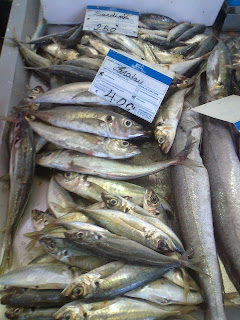
Portugal é um dos países onde mais peixe se consome a nível mundial, e é o país da União Europeia com o maior consumo anual por pessoa: 56 kg, quando a média da UE é 23 kg. A extensa costa, a grande tradição pesqueira e os hábitos culinários são algumas das razões que podem explicar a preferência dos portugueses por pescado. Mas, com um consumo tão grande de peixe, vem também uma elevada responsabilidade para Portugal quanto à exploração dos recursos marinhos. O peixe é um dos últimos produtos selvagens utilizado na alimentação. Os animais alimentam-se e crescem de acordo com os seus ciclos de vida, no ambiente natural, e sem produtos químicos que suportem o seu crescimento. Para além disso, o peixe é uma fonte de proteína animal de excelente qualidade nutricional. Para continuarmos a ter peixe no prato é preciso gerir a pesca e definir as formas sustentáveis de produzir peixe a longo prazo. Há duas formas essenciais para atingir a sustentabilidade: por um lado, precis...

Consumer awareness of MSC ecolabel

Image
Increased awareness and concerns for sustainability and environmental issues is influencing consumers and their everyday purchases. 45% of Swedish shoppers report buying more products with ecolabels than a year ago – with an equally strong response of 34% of Dutch consumers. 23% of Swedish respondents say that they only buy fish and seafood from sustainable sources, regardless of price and quality, and are even prepared to go elsewhere if the product they are looking for is not available. In the Netherlands, ecolabels rank as the most trusted sources of information about sustainability – with friends and family recommendations coming second, an indication of how much more sustainability issues are part of everyday conversation. An average of 54% of Dutch and Swedish respondents believe ecolabels are effective in helping bringing changes to environmental/ social problems (33% still undecided) and 55% think that the MSC is helping to ensure we have wild caught fish in the future (40 st...

Conservar o que é bom

Image
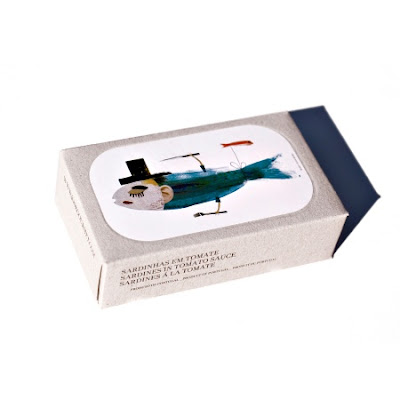
Um dia destes por Portugal a I. mostrou-me as conservas José Gourmet. Encontrei nas lojas gourmet do CCB e no aeroporto. Com um design moderno e original, valorizam o que há de melhor nos produtos tradicionais portugueses. E as conservas de pescado são uma das apostas. Acho a ideia muito interessante! Uma lata de conserva de sardinha, ou de outro pescado, é sem dúvida um fast food de proteína animal selvagem, de qualidade e tipicamente português. Se em Portugal sabemos fazer conservas e temos o melhor peixe de mundo, porque é que os portugueses não utilizam e valorizam o que é bom? Lembrou-me de há uns anos uns amigos italianos levarem das férias de Portugal latas de conserva de sardinha para darem à família. Era a melhor lembrança que poderiam oferecer a alguém que aprecia boa comida. Fui à procura de mais informação sobre a empresa e partilho exactamente da mesma ideia que motivou o projecto. É difícil de encontrar produtos portugueses fora de Portugal: «Quando o meu ...

To be or not to be eco

Image
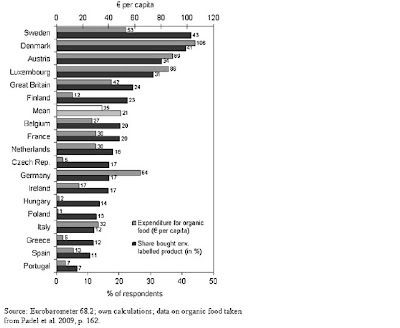
Um interessante artigo publicado sobre a eco-certificacão faz a comparação entre o consumo destes produtos nos diferentes países Europeus: Näo foi surpreendente ver que a Suécia é o país com o maior consumo de produtos ambientalmente certificados (43%). Ao contrário de Portugal, que é o último! Apenas 7% dos entrevistados a confirmarem a sua preferência por este tipo de produtos. Na Suécia, além de haver uma forte responsabilidade social, há também uma estrutura de eco-certificação bem montada. O KRAV é um organismo que certifica ambientalmente os alimentos e em qualquer supermercado é possível adquirir este género de produtos. Existe KRAV em todos os tipos de alimentos. Existe também KRAV para o peixe. O mais interessante é que muitas vezes a diferença do preço é baixa, o que facilita a opção de escolha. Um exemplo que funciona bastante bem é o do leite: a marca mais comum de leite tem sempre disponível o mesmo produto com ou sem certificação, e a diferença no preço ...