Posts

Showing posts with the label Hábitos

Pet dinner with conscience

In June 2014 there were  released news from a six-month investigation about slave labour to fish prawns for supermarkets in US and UK . It was revealed that large numbers of men are being bought and sold like animals and held against their will on fishing boats off Thailand to work in the production of prawns (commonly called shrimp in the US) sold in leading supermarkets around the world. The news raise the discussion about seafood traceability and retailers as Carrefour took action in dissociating their supermarkets from a human exploitation and lack of human rights production source. At this time the discussion was about prawns, an expensive and high value seafood product, but more is needed to discuss when it comes to Thai seafood industry for low quality standard as pet food: The USA is the biggest customer of Thai fish, and pet food is among the fastest growing wxports from Thailand, more than doubling since 2009 and last year totaling more than $190 milion. The a...
Image
About 40% of the cereals and legume grains produced every year are used to feed farm animals. Many commentators argue that this is highly resource inefficient as around 70% of the human edible energy produced is lost in this process due to metabolic losses in the animals (Papargyropoulou et al., 2014).  For example, typically 4 kg of cereals and legumes is needed to produce one kg of edible poultry meat (Röös et al., 2014), although the quantity varies by system.  By contrast raising livestock on by-products that humans can’t or don’t want to eat or waste is often considered to be a resource efficient way of producing protein for human consumption, as is raising livestock on biomass from grasslands unsuitable for the production of human edible foods e.g. natural or semi-natural pastures or other marginal grasslands.  This approach of letting the ecological resource capacity be the constraining factor for livestock production, i.e. to restrict livestock production...

Omega-3 exist not only in fish

Insect oil is a possible new source of the healthy omega-3 fatty acid.  Insects make fatty acids by nature and can live on organic waste.  A team of researchers examines which insects can best be used for oil and what their optimal diet should be. The insects seem to be the next food generation: one can grow them at home, feed them with leftovers, conserve them with few resources and, use them as food to substitute animal protein or, as it seems now, also omega-3 fatty acid found in fish. Great! We just need to start to like to eat them...

Scholarscarbon footprint

Usually researchers travel a lot to attend to conferences, meetings or field work. It is important to meet people from different countries, share work and discuss ideas. But we should rethink how often scholars fly from all over the places to meet just for a few days. A group of 56 scholars launched a petition calling upon universities and academic professional associations to greatly reduce flying-related footprint as part of effort to cut greenhouse gas emissions. Why? Because flying contributes significantly to global climate change.  It is responsible for 2-3% of annual global CO2 emissions–about the same percentage that Germany and the city of Beijing, for example, contribute each year.  Flying’s share of global emissions is growing steadily as the growth in total flying miles outstrips improvements in fuel and engine efficiency.  Because flying releases various pollutants at high altitude, its detrimental impact is far greater than that caused by CO2 emis...

Decluttering

deciding what is essential in our lives isn’t about paring back our belongings and forgoing our beloved but unnecessary frivolities: instead of determining how little we can live with, it’s about working out what we cannot live without. I learned a new word in English: declutter. it means  remove unnecessary items from (an untidy or overcrowded place) . every time that someone gives me something nowadays, first I stop to think if I really need that thing or not, and sometimes I say thank you but I do not want it. a friend of mine once could not understand why I could not accept a small gift, a cup, from her family. some people might think that it is also rude to say no. but I had moved home recently once again and after so many moves (in the last 4 years I lived in 6 different places and in 2 different countries), I think about everything I have at home since soon or later I will need to carry it. also as much things I have, as much space I will need for those t...

Eat greener, not too much and be active!

Image
There are new dietary guidelines  to Sweden, which include not only the health concerns, but also the environment. It has a ‘Sustainable big picture’ stressing the need to focus not just on individual nutrients but to take a holistic view that also includes physical activity and environmental concerns. And what do they say about fish consumption? Eat fish and shellfish two to three times a  week.  Vary your intake of fatty and low-fat  varieties, and choose ecolabelled seafood. In summary, the advice is: Eat fish and shellfish two to three times a week – vary the type of fish and look for products with sustainability labels  Exercise at least 30 minutes every day  Switch to whole grain for pasta, bread and cereals – all cereals have low carbon footprints and pesticide use is low  Choose healthy fats like rape seed oil – butter has a higher carbon footprint than vegetable oil  Choose low fat, un-sweetened dairy products fortified...

Policies and actions to shift eating patterns

we need to shift eating patterns due to the environmental impacts. but,  what does it work to shift those patterns? how can we shift individual choices when their consequences are not seen immediately or are quantified only in the long term or geographically far away from where the choice is done? this is an answer that nobody has. it is also a different depending on the country or political or cultural realities. one way to answer  is in this  report   and says it is made of different  approaches: No one approach will achieve the changes we need in the time we have. A mix of approaches – regulatory, fiscal, voluntary, and contextual and information oriented – is required. Other conclusions are: Consumption matters: sustainable healthy diets should be a policy priority: A global shift towards more healthy and sustainable eating patterns is urgently needed. Policy makers and industry need to recognise the importance of this goal...

Does seafood knowledge relate to more sustainable consumption?

Maybe not! Portuguese know a lot about seafood comparing to other countries but that does not make them more conscious about the environmental consequences of their choices. Is it good or bad? In my opinion, we can only say it is different. Each country has a tradition on how to prepare seafood and that influences the way people eat and purchase seafood. The important thing is to find the differences and work based on them to change habits. In North European countries people are more willing to buy certified seafood. That is very good but in Portugal does not work in that way. Nevertheless Portuguese have habits that can be considered very sustainable, as for example the joy of eating small pelagic fish (e.g. sardines). If more people in the world would eat small fish (e.g. anchovy), we could use more fish as food instead of using to feed other animals (e.g. salmon) and more animal protein would be available directly to people. Whatever one can find through numbers and st...

Biodiversity in the supermarket

I think it is very interesting to understand the biology of food. I'm always curious to know more about: where it comes from, how it was grown, and how it came to the supermarket shelf. It is not easy to have such a broad knowledge. Nowadays we have everything, during all the time, available to consume. We do not even care or understand the seasonality of food production. It is not easy to chose when we cannot understand how much it requires to bring that small living thing until the shelf in our food store. This project shows the biodiversity in the supermarket.  It is fun to show the many fish one can find in a Portuguese supermarket... Biodiversidade no Hipermercado - Um Mar de Peixes from Terra Líquida Filmes on Vimeo . ...but bacalhau is not a Portuguese fish! Maybe it would be better to say that it is a Portuguese way to prepare fish that comes from Norway, Iceland or Newfoundland (North-West Atlantic) .

Um polvo a percorrer países

Por um capricho gastronómico, aquele polvo, um molusco cefalópode como tantos outros, ascendeu ao jet-set internacional. Do momento em que o pescaram até ao instante em que foi ao forno, à lagareiro, percorreu pelo menos três países e experimentou quase todos os modos possíveis de transporte. ... Foram as inscrições no rótulo que me despertaram para o disparate que fizera. O bicho vinha da zona FAO 34, uma das grandes áreas de pesca em que a burocracia das Nações Unidas repartiu os oceanos. Começa no estuário do rio Congo e vai até ao estreito de Gibraltar. Possivelmente o polvo foi capturado nas águas do Marrocos ou do Senegal, por uma embarcação com certeza espanhola. Ou seja, nem sequer era português.  Um bicho globe-trotter como aquele, ainda por cima congelado, não existe sem uma factura energética incomportável, para a qual eu contribuí com uma grande parcela.  Fraca compensação é dizer que a iguaria, uma vez assada, estava uma delícia. Todo o episódio foi um desast...

Portuguese Food Balance Sheet

Image
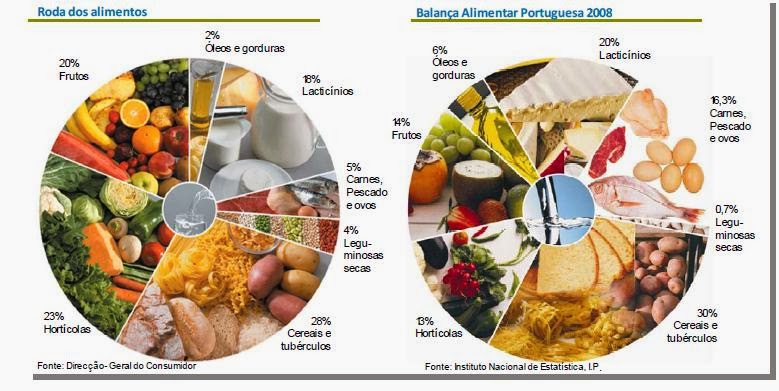
De facto, para se alcançar a tipologia de consumo preconizada pela roda dos alimentos, os cidadãos residentes em Portugal deveriam aumentar em cerca de 5 vezes as quantidades consumidas de leguminosas secas e suplementar ainda a sua dieta com hortícolas e frutos em, respectivamente, mais 79% e 48%.  Por outro lado, o consumo de carne, pescado e ovos e de gorduras e óleos é excedentário, tornando-se necessário reduzir as quantidades disponíveis para consumo em, respectivamente, 70% e 67%. Portuguese consume 10% more meat/seafood than they should to achieve the healthy requirements (INE 2010). In the other way around, less 10% of vegetables. A shift from one to another would reduce environmental impacts and provide a healthier diet.

Now it is their time

Image
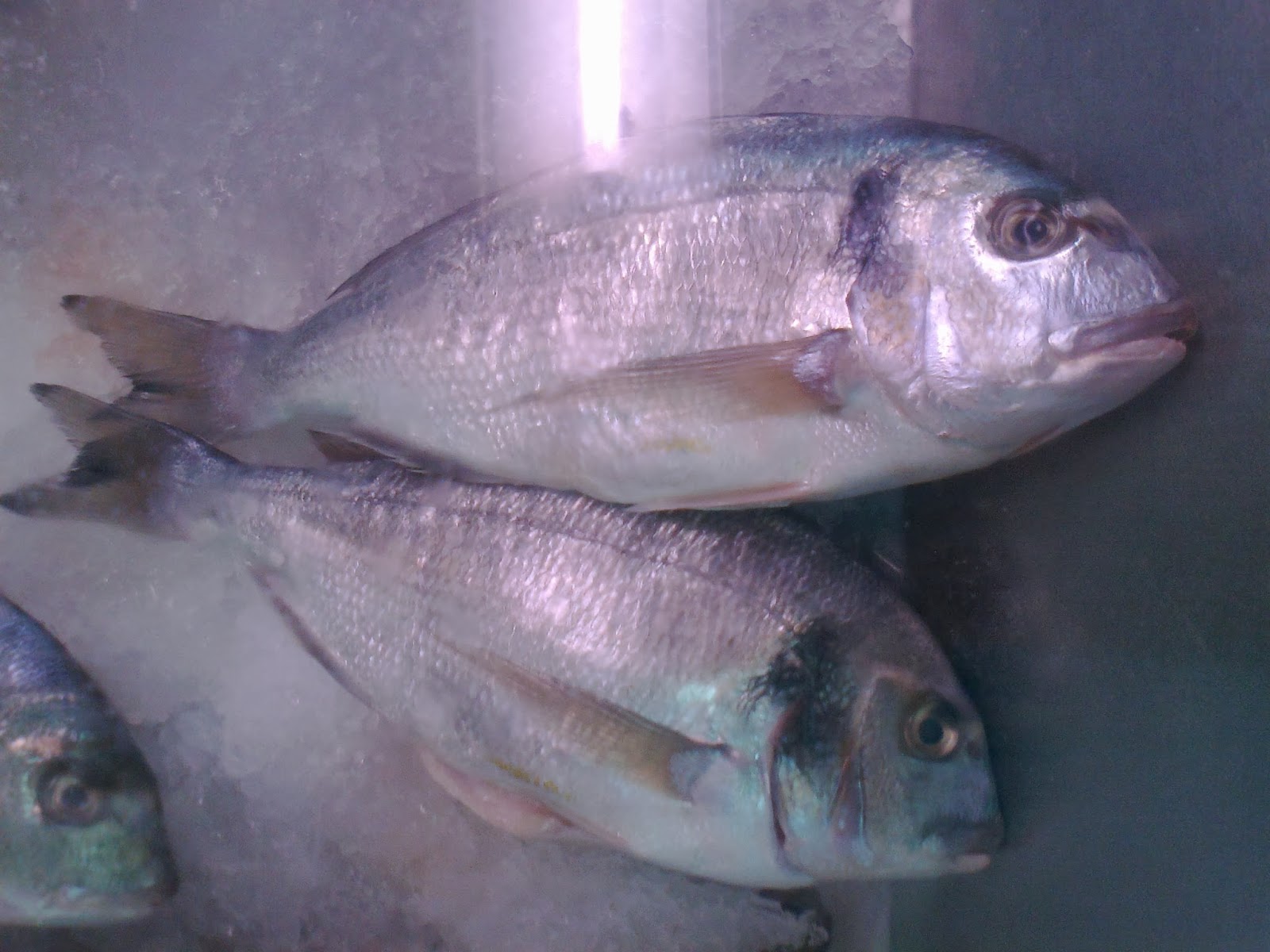
Quando alguém escreve assim sobre peixe, fica pouco por dizer. Não há tese de doutoramento que consiga descrever melhor o consumo de peixe em Portugal. As palavras parece que têm sabor. A qualidade do peixe é reconhecida. Os ciclos naturais são respeitados. E explica que o peixe é um alimento selvagem porque tem de ser "caçado" no mar. Se ninguém ainda o fez, eu agradeço aqui em nome dos peixes. -- When someone writes like this about fish, there is nothing more to say. There is no doctoral thesis that can better describe the seafood consumption in Portugal.  The words seem to have flavor.  The fish quality is recognized. The natural cycles are respected. And explains that fish is wild food because is "hunted" in the sea.  If no one has done yet, I thank here on behalf of the fish. Na ponta da língua | MEC 24.01.2014 Sargos, douradas e robalos: agora é que é altura de abarbatá-los Estando de cabeça perdida são mais fáceis de p...

The perfect protein

Image
​ In The Perfect Protein, Andy Sharpless shows how seafood is the healthiest, cheapest, most environmentally friendly source of animal protein on Earth.  Sharpless contends that we must save the world’s seafood not only to protect marine life and biodiversity but also to stave off the coming humanitarian crisis.  With Earth’s human population expected to reach 9 billion by 2050—adding the equivalent of two Chinas to current numbers—we need wild fish more than ever to feed us (especially the nearly 1 billion of the world’s poorest people who rely on seafood as their main source of animal protein).  The bad news is that wild fish populations are in decline because of overfishing, destruction of habitat, and bycatch.  We are grinding up small “reduction” fish such as anchovies, mackerel, and sardines into feed for salmon and other farmed animals even though these overlooked fish are delicious and packed with health-boosting omega-3 fatty acids—and could feed mi...

Healthy food, healthy planet

Eating for a Healthy Planet: Trailer from dragonfly on Vimeo . The environmental impact of livestock agriculture is so significant, that going one day a week meat-free achieves more greenhouse gas reductions than eating all-local foods, seven days a week. We must not forget the fish! Especially in Portugal. It can not happen to turn a meat-free meal in a fish-ok meal. Vegetables, we love you.

Food is a shared necessity but also a shared way of thinking

We are what we eat. The world is also what we eat. And food is a tool to shape the world. 

Taste the waste of water

Image

Portuguese love fish

De acordo com esta especialista na área alimentar, não há necessidade de introduzir o peixe na nossa alimentação, porque "ele está lá já".  Aliás, faz questão de frisar, "os portugueses têm uma cultura de ingestão de peixe superior a qualquer outro país da Europa".  Está portanto provado que "nós gostamos de peixe" e, por isso, só temos de escolher os "mais certos em termos de saúde".  E os três exemplos atrás citado reúnem várias qualidades: são ricos em ómega 3, têm pouco mercúrio e, além disso, são baratos e permitem ser cozinhados de diversas formas. Very wise to hear a nutritionist saying that it is not necessary to promote more fish in the Portuguese food habits. It is already there and it is enough. The only advice is how to choose the best fish. Who are they? ...sardine, horse mackerel and chub mackerel. They are small pelagic fish, rich in omega 3, with low levels of mercury, and cheap! Good for your health, for the environm...

God fish

Image
I usually talk about cod with other people when I speak about my work, both in Portugal and in Sweden. Even very far way, and with different cultural habits, in both places cod is the most appreciated fish. Now days there is a new fact for the discussion "should we eat or not cod?": cod stock from Norway is in the best shape than ever. And it is MSC certified. Are consumers aware about that? I'm not sure. Especially in Portugal, where most of the people do not even know about the cod collapse. A Swedish blogger went to an event about fish from Norway in this  restaurant , that sells fresh fish, and he have made his decision: I know it's fresh cod from sustainable stocks, but I do not know how to find it in the store. And I think it has the higher climate emissions and that bottom trawling destroys seabed so I still avoid it. To track the sustainability of the fish sold, they give information about the ...

What is the carbon footprint of a decent life?

A very important question. But a very difficult answer. To read this make my PhD work day worthwhile: What it means to live well is always going to be a subject for debate. But several things are clear at the outset. Firstly, it is nonsense to suppose that people can flourish without food, clothing and shelter. Sustainable living must deliver the material provisions necessary for a reasonable level of nutrition and physiological health.  But equally it is clear that material needs do not exhaust our appetite for material goods. Much of what we mean by living well can be characterised as social and psychological - rather than material - in nature. Once material needs are met, people's ability to flourish depends on their "ability to give and receive love, to enjoy the respect of [their] peers, to contribute useful work, and to have a sense of belonging and trust in the community"  (Jackson, 2009). I love this man, Tim Jackson. It is never too mu...

Moments in a sardine life III

...in Brazilian. Portugueses garantem que têm a melhor sardinha do mundo!  Com uma viúva de pescador, o Globo Repórter vai descobrir se a sardinha portuguesa é mesmo tão especial.  A sardinha vai ser feita à moda de Nazaré.